What Emerald Ash Borer is and why it matters
EAB is a wood-boring insect accidentally transported from Asia and first found in North America in 2002 in southeastern Michigan and Windsor, Ontario. It infests and kills every North American ash species (Fraxinus), including green, white, black and blue ash and their cultivars. The larvae feed under the bark, cutting off the flow of water and nutrients, and infested trees die from the top of the canopy down over roughly two to five years.
Infestation is fatal to healthy ash trees unless they are treated. Ash is one of the most common trees in Colorado communities, and in Michigan the largest cost fell on towns that had to remove thousands of dead trees at once. Many were hazardous and expensive to remove. An early assessment gives Denver homeowners and HOAs time to plan.
Signs your ash tree may be infested
- Thinning canopy, usually starting at the top of the tree
- D-shaped exit holes about an eighth of an inch across in the bark
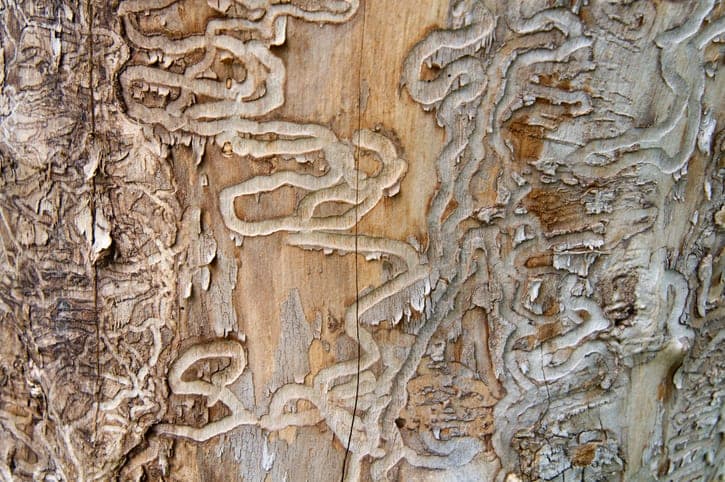
- Bark splits exposing S-shaped larval galleries beneath
- Woodpecker damage as birds go after the larvae
- Sprouts at the base of the trunk or along the lower stem
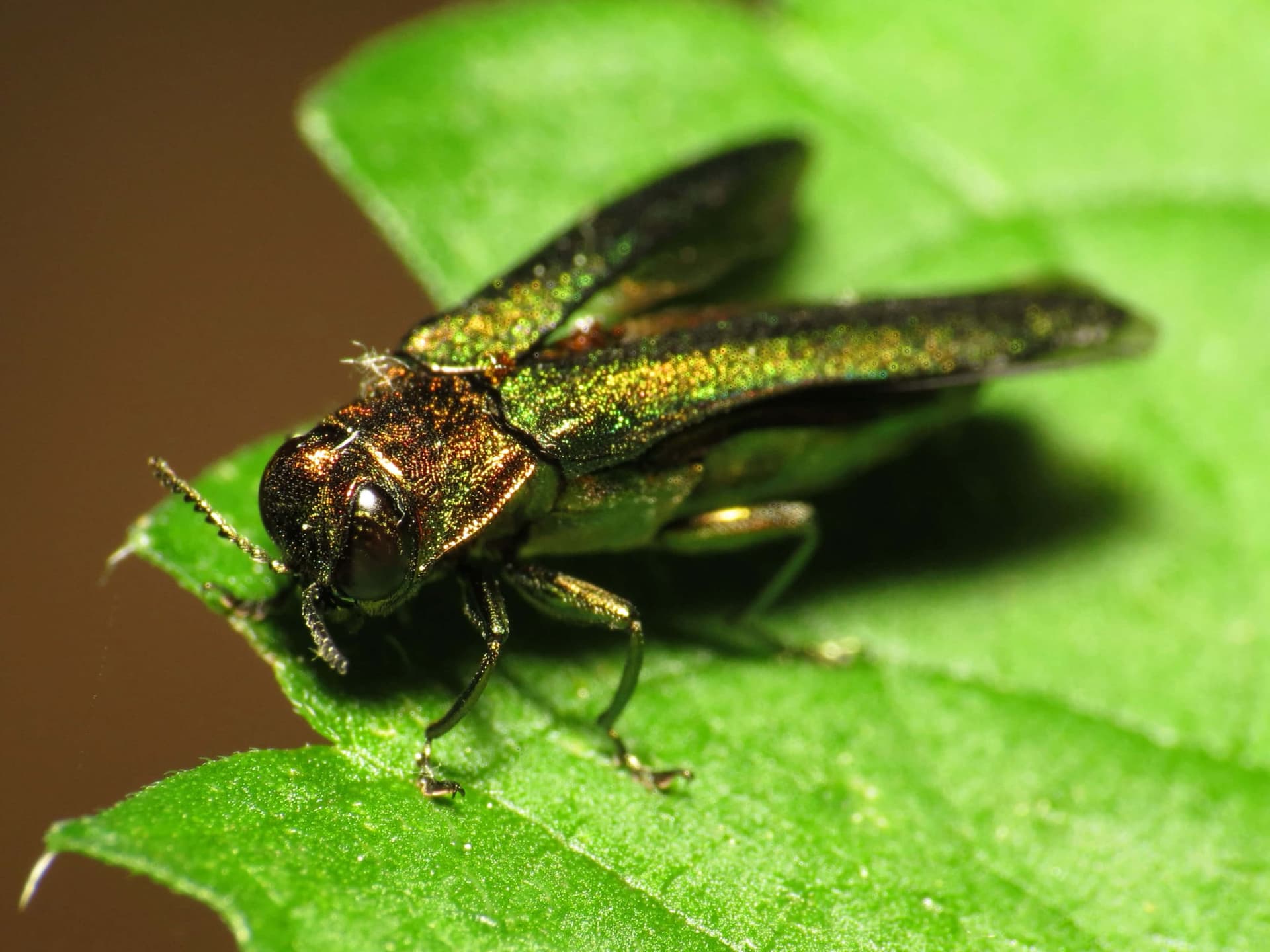
Don't confuse EAB with the native lilac ash borer, a clearwing moth that prefers already-stressed trees, favors white ash and lays eggs low on the trunk early in the season. EAB is a metallic beetle that favors green ash and lays eggs on bark throughout the tree from late May to early July. An arborist can tell them apart on site.
How treatment works and when to schedule it
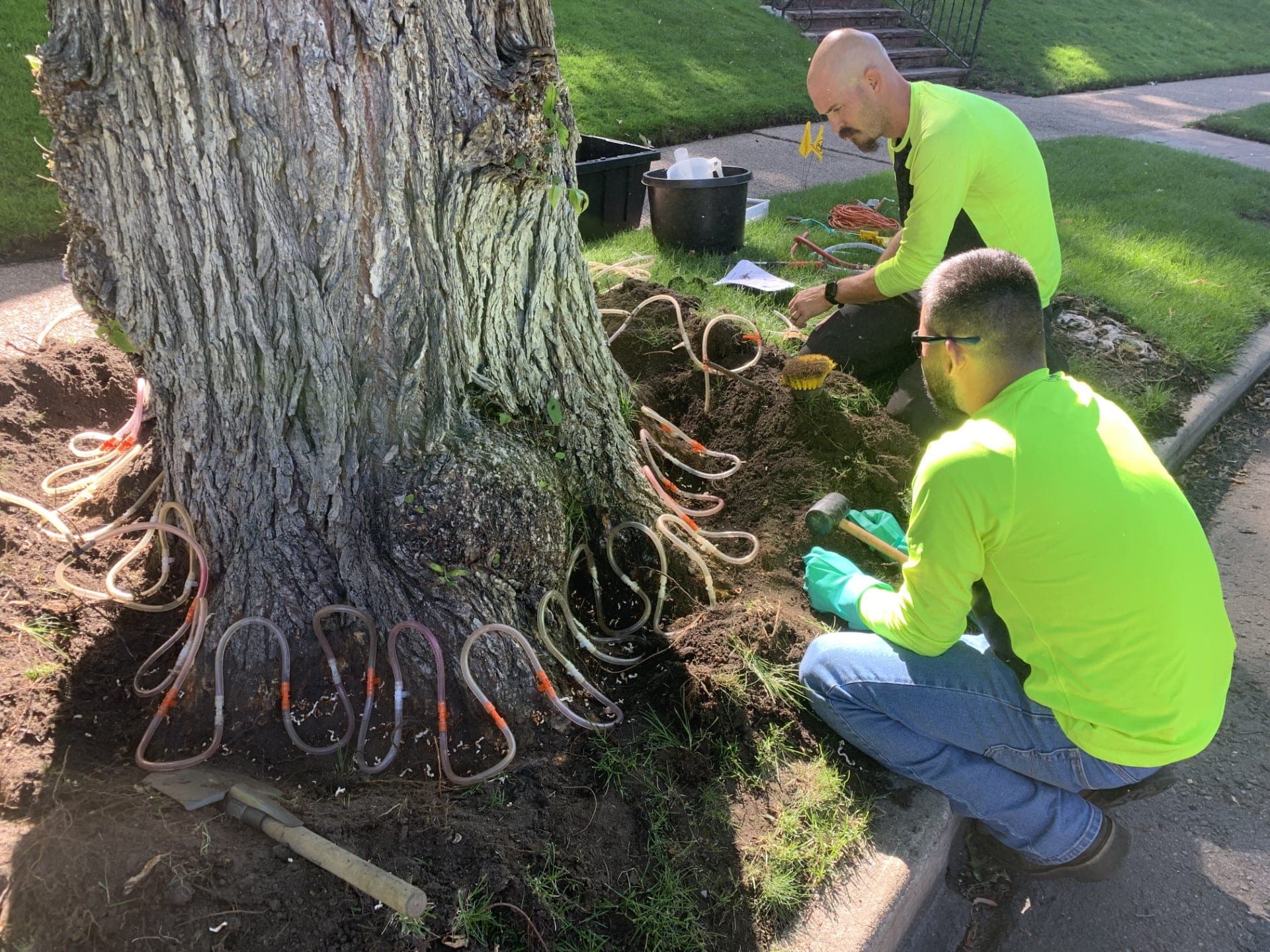
Treatment means protecting the tree with systemic insecticide, and it is a long-term commitment: treatments may be needed for the rest of the tree's life. Trees have been saved with treatment in heavily infested Midwestern cities, though no method carries a 100% guarantee. Trunk injection has shown better control than soil-applied products.
The treatment method depends on the size of the tree. Ash under 8 inches in diameter at breast height gets a soil injection, most effective in March and April. Trees over 8 inches get a trunk injection, most effective in May and June. Price depends on the size of the tree, and every estimate is free.
Treat or remove? Which ash trees are worth saving
Worth treating: ash trees that are healthy and vigorous with more than 30–50% of their leaves, that enhance the landscape, or that you value.
Better removed and replaced: weak or unhealthy ash, trees planted in poor sites, trees that aren't important to the landscape, and any tree already showing signs of infestation. Trees in poor health rarely respond well to treatment, and for a small or struggling ash it is often more cost-effective to replace it than to pay for ongoing treatment.
Removal is easier and less disruptive in winter, when the ground is firm and pests are dormant. See our tree removal and planting services if you decide to replace.
What you can do now
- Find out whether the trees in your yard are ash.
- Book a free assessment so a certified arborist can rate each tree's health and recommend treatment, monitoring or removal.
- If treating, schedule it for the effective window (spring soil injection or early-summer trunk injection).
- Share this with neighbors and your HOA: the earlier a block acts, the fewer emergency removals later.
American Arbor Care has certified arborists on staff and holds the licenses, insurance and qualifications required by the Colorado Department of Agriculture to apply pesticides. Current EAB locations are published by the USDA EAB story map and CSU Extension.