The four factors that set the price
Four factors determine the work, equipment and time a removal needs:
- Size and height. A 70-foot cottonwood needs more cuts, rigging and hauling than a 20-foot ornamental.
- Location and accessibility. A tree in an open front yard can often be felled in sections from the ground. One wedged between a house, a fence and power lines has to be dismantled piece by piece with ropes, an aerial lift or a crane.
- Complexity. Dead or storm-damaged wood is unpredictable and needs slower, safer rigging. Trees leaning over structures, or with multiple trunks, take longer.
- Emergency removal versus standard scheduling. A tree on a roof after a storm has to happen now; a planned removal can wait for the most efficient slot on our calendar.
Why we don't publish a price list
Two trees of the same species can be very different jobs: one stands in an open yard, the other over a garage with power lines through the canopy. A certified arborist checks the tree, access and drop zone, then writes an itemized estimate. It lists removal, cleanup and hauling, with stump grinding quoted separately.
The estimate is free and comes with no continuing service agreement. If you're comparing quotes, make sure each one covers the same scope: full cleanup, chipping, hauling, and proof of licensing and insurance.
What's included in an American Arbor Care removal
- An on-site assessment by a certified arborist to plan equipment and methods
- An itemized, written estimate with no continuing service agreement required
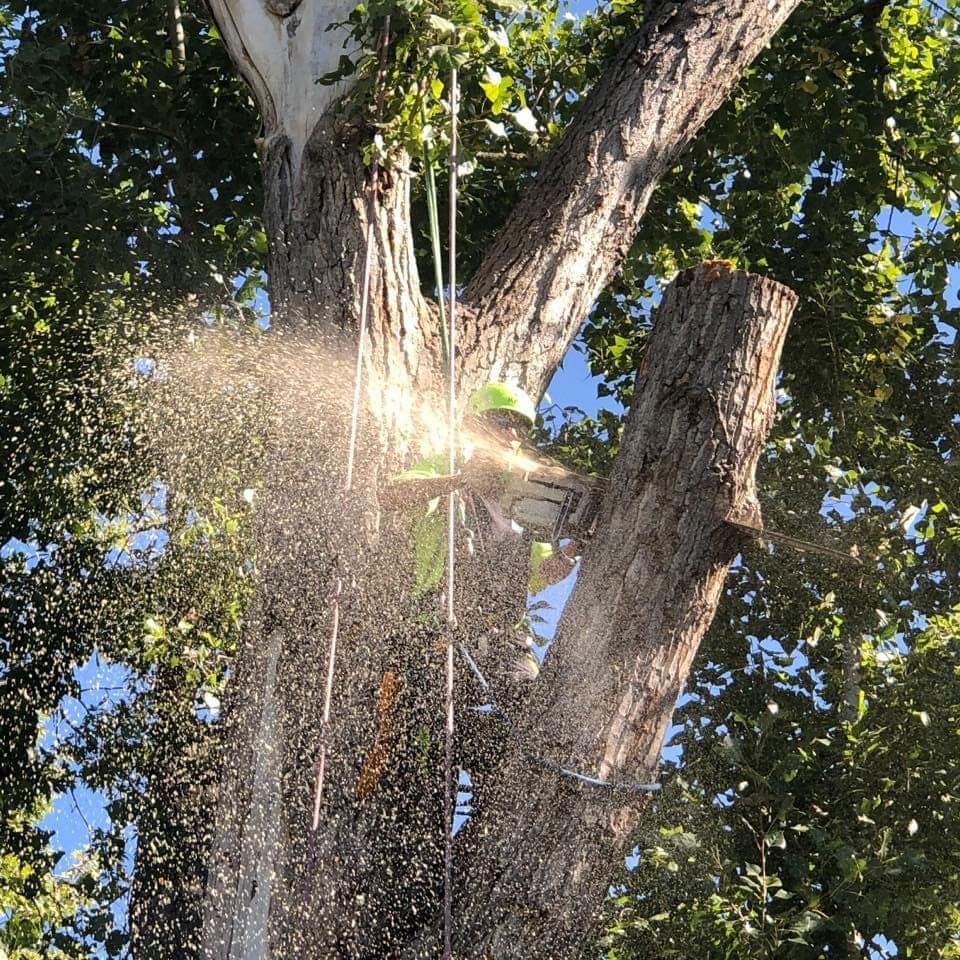
- Safe removal by a licensed, insured crew working to OSHA and ANSI Z133 standards, using aerial lifts and rope-and-saddle systems as the site requires
- Thorough cleanup and brush chipping, with wood hauled away
- Optional stump grinding, quoted as its own line so you can decide
We call in utility locates before any grinding, and only trees in the public right-of-way ("tree lawn") need a City of Denver permit. We'll assess the job and help with the permit if one is required.
How to keep the cost down
- Schedule in winter. Frozen ground protects your lawn, leafless canopies are easier to work, and most pests and diseases are dormant, so removal is smoother and less invasive.
- Don't wait on a dead tree. Dead wood becomes brittle. That makes it more dangerous and more expensive to rig as time passes.
- Bundle work. Pruning other trees or grinding a second stump while the crew and equipment are on site costs less than a separate visit.
- Ask about discounts. We offer a 5% senior or veteran discount and a 5% pre-payment discount on tree and lawn care treatments paid before March 31.