What dormant oil controls
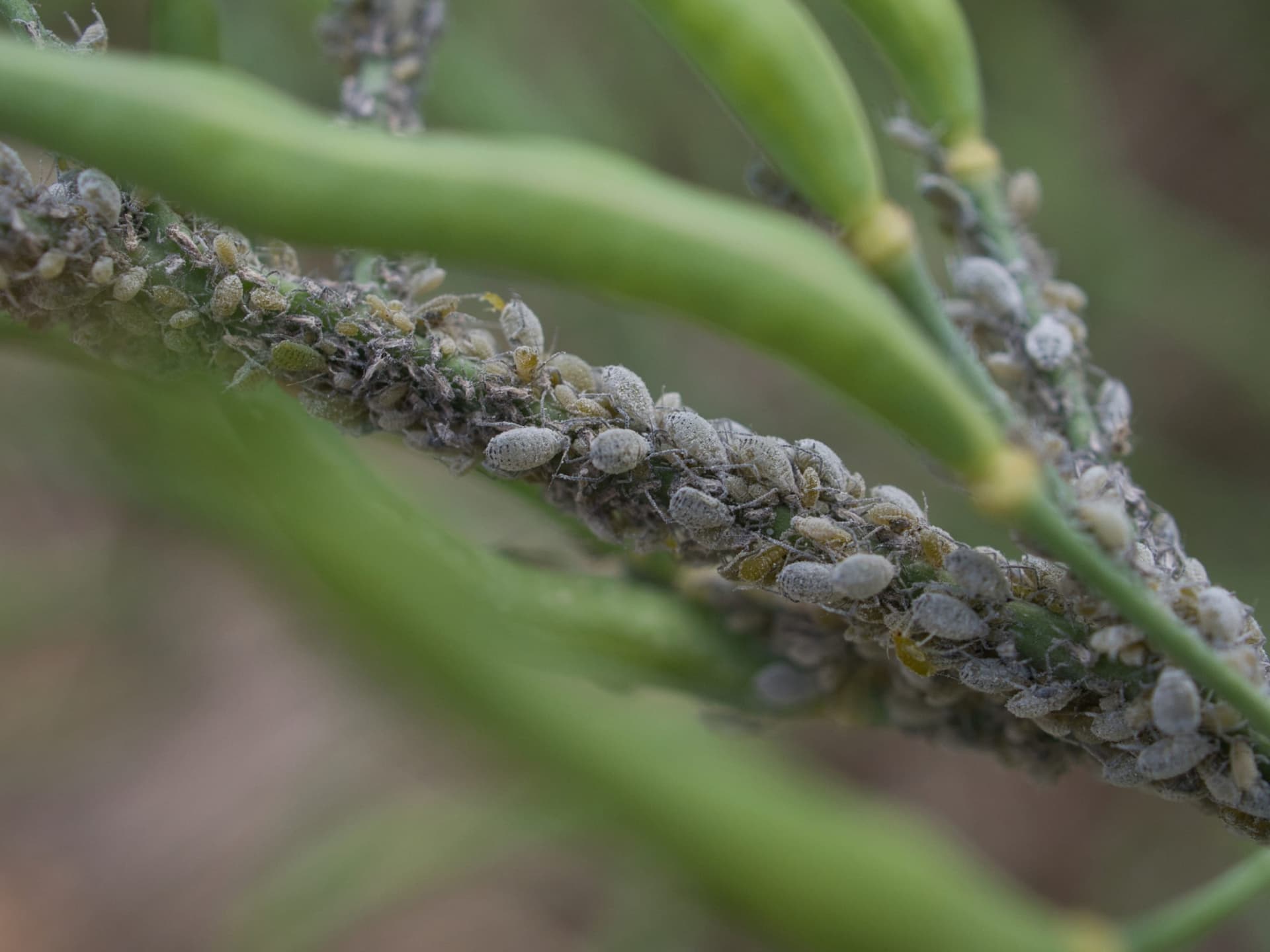
Horticultural oil works by coating and smothering soft-bodied insects and eggs. Applied in the dormant season, it reaches pests that spend the winter exposed on bark and twigs:
- Some scale insects that overwinter on twigs and bark
- Eggs of aphids, including many that later cause sticky honeydew
- Eggs of spider mites on certain trees and shrubs
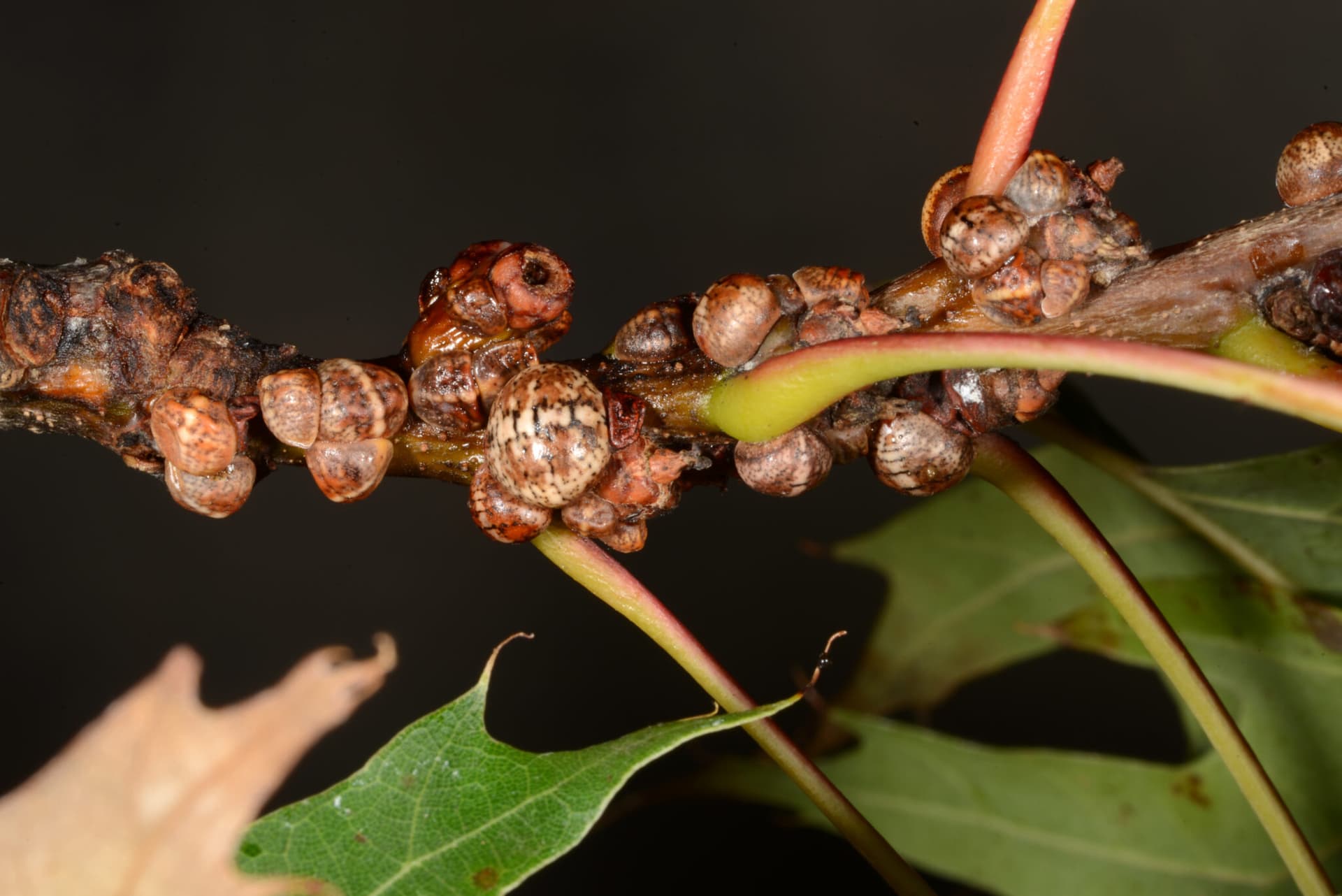
It does not reach insects that are inside the wood or protected under bark, such as borers. Some pests are better treated at another time of year: kermes scale on oaks, for example, is usually treated when the young crawlers are active. See our guides to kermes scale and aphids and spider mites.
Timing in Denver
Along the Front Range, dormant oil usually goes on from late winter into early spring, while plants are still dormant and before buds open. The day needs to be dry and above freezing, with no hard freeze expected soon after, so the oil can spread and dry properly. Spring weather here changes quickly, so applications are scheduled around the forecast.
Plants that should not be sprayed
Oil removes the waxy coating that gives blue spruce its color, so it can turn blue needles green until new growth comes in. Some maples, walnuts and other plants are also sensitive to oil. Your arborist checks the label and the plants on your property before spraying, and skips or protects plants that could be damaged.
Part of a plant health care plan
A dormant spray reduces the pests that build up in spring, so fewer treatments may be needed later in the season. Dormant oil spraying is part of our plant health care service, applied by licensed applicators. Request a free estimate or call 303.639.8584.