Signs of ips beetle activity
- Needles fading to yellow or red, often starting at the top of the tree
- Reddish-brown boring dust in bark crevices or at the base of the tree
- Small round holes in the bark and pitch flowing from the trunk
- Branching "engraved" galleries under loose bark
Drought, transplant stress, root damage, storm damage and recent construction all make spruce and pine more attractive to ips beetles.
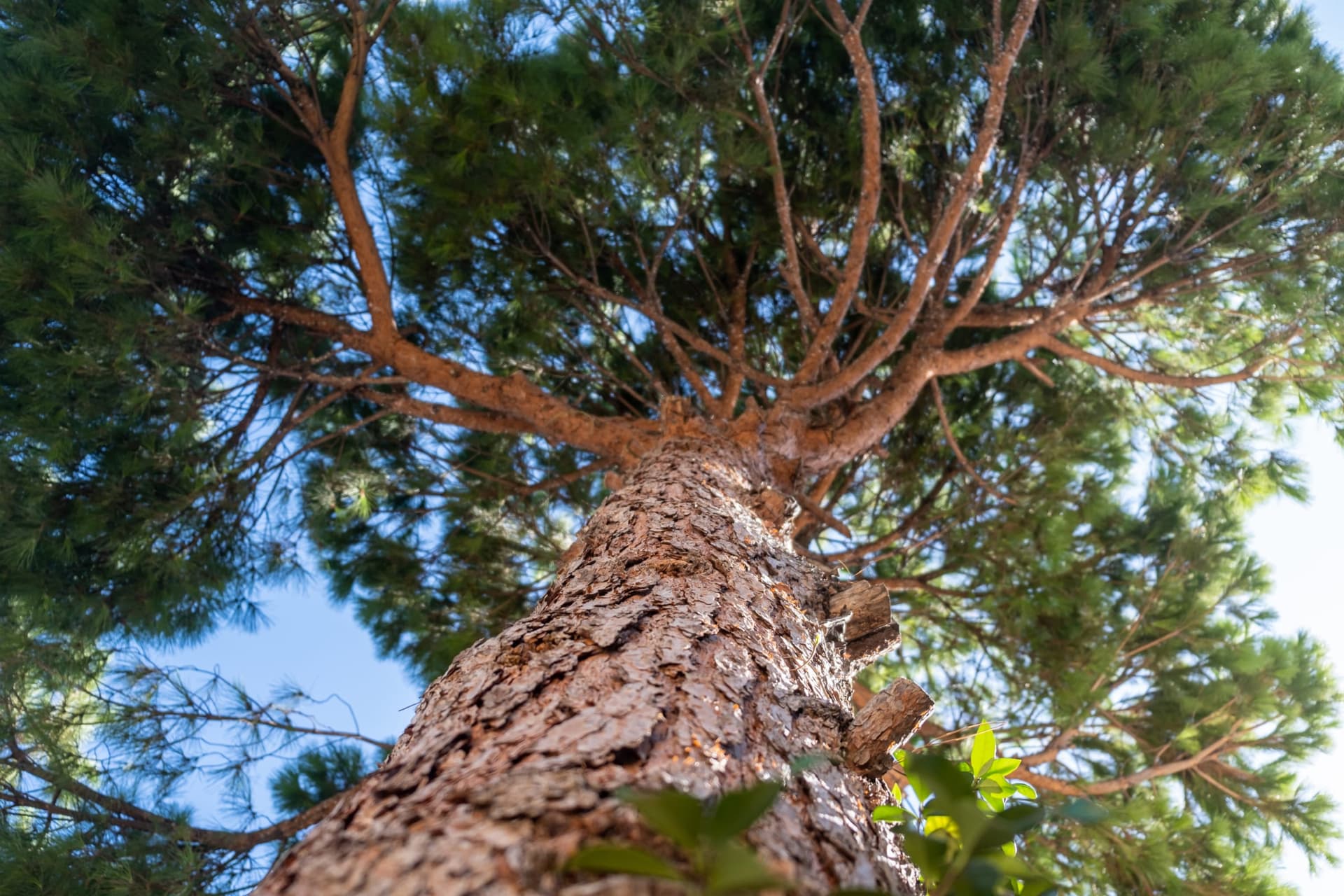
How to protect spruce and pine
- Water during dry periods, including winter watering when the ground isn't frozen. A well-watered tree can defend itself with pitch.
- Avoid fresh wounds during beetle season, and don't leave fresh spruce or pine branches, logs or firewood near healthy trees, because they attract beetles.
- Preventive bark sprays coat the trunk and larger branches of high-value trees before beetles fly in spring, so beetles that land are killed before they can bore in.
- Remove infested trees promptly so new beetles don't emerge and move to nearby trees.
When to schedule treatment
Preventive sprays work only if they're on the bark before beetles attack, so they are applied in spring ahead of the first flight, and a second application may be recommended for later generations. Our article why to treat for ips beetles early covers the timing.
If you see fading needles or boring dust, call promptly. An arborist can tell whether a tree can still be protected or should be removed to protect the trees around it.
Work with a certified arborist
Ips beetle protection is part of our plant health care service. American Arbor Care holds the licenses required by the Colorado Department of Agriculture to apply pesticides, and our ISA Certified Arborists assess each tree before recommending treatment. Request a free estimate or call 303.639.8584.