Why ash trees in Denver need a decision now
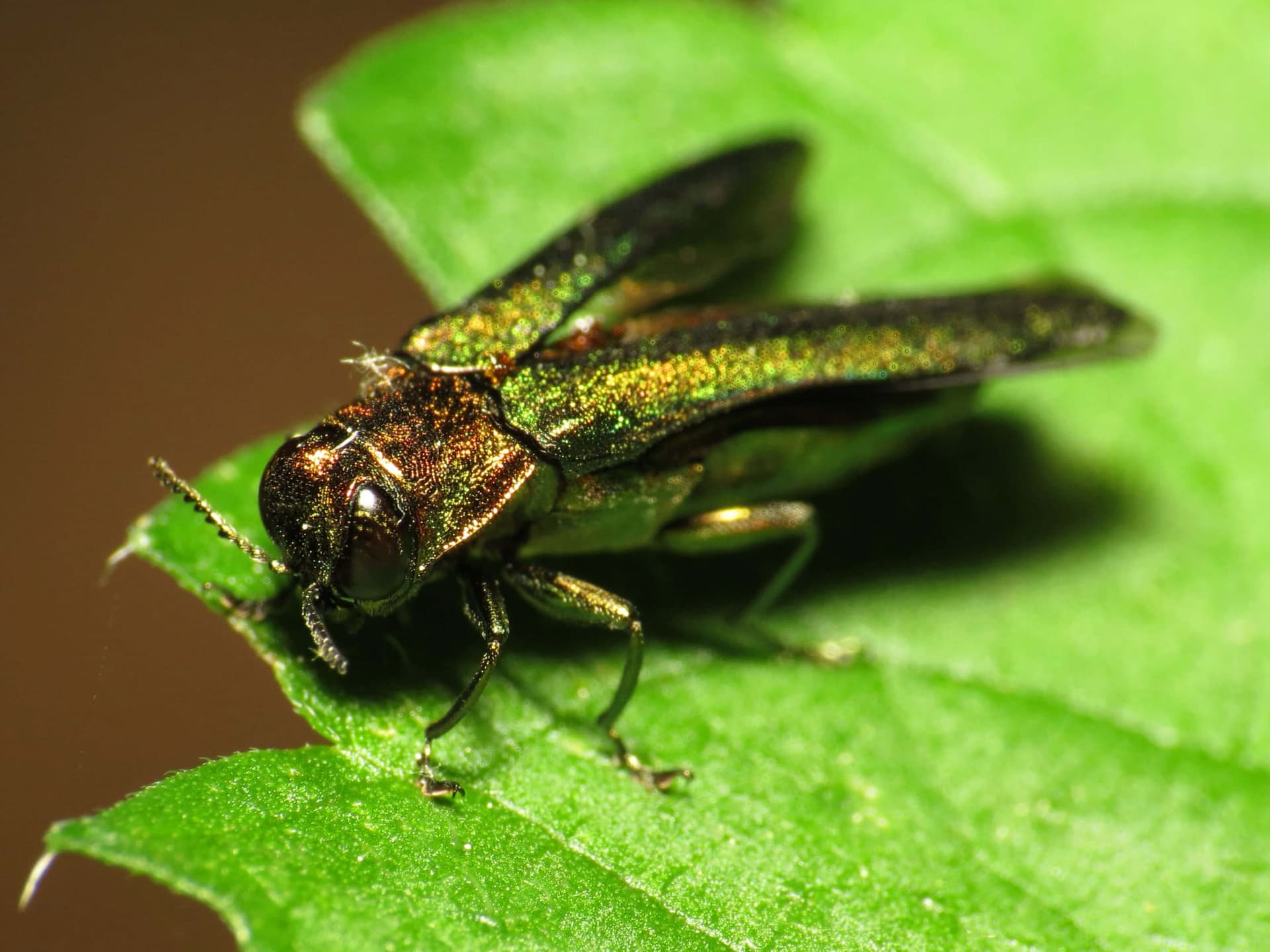
Emerald ash borer was found in Littleton in 2023 and confirmed in the Denver area in 2025. Its larvae feed under the bark and cut off the flow of water and nutrients, and an untreated tree typically dies within two to five years of infestation. Ash is one of the most common shade trees along the Front Range, so most neighborhoods have several.
Healthy ash trees can be protected, but treatment works best before the tree shows serious damage. Our emerald ash borer guide covers the warning signs and how to tell EAB from the native lilac ash borer.
Trunk injection and soil injection
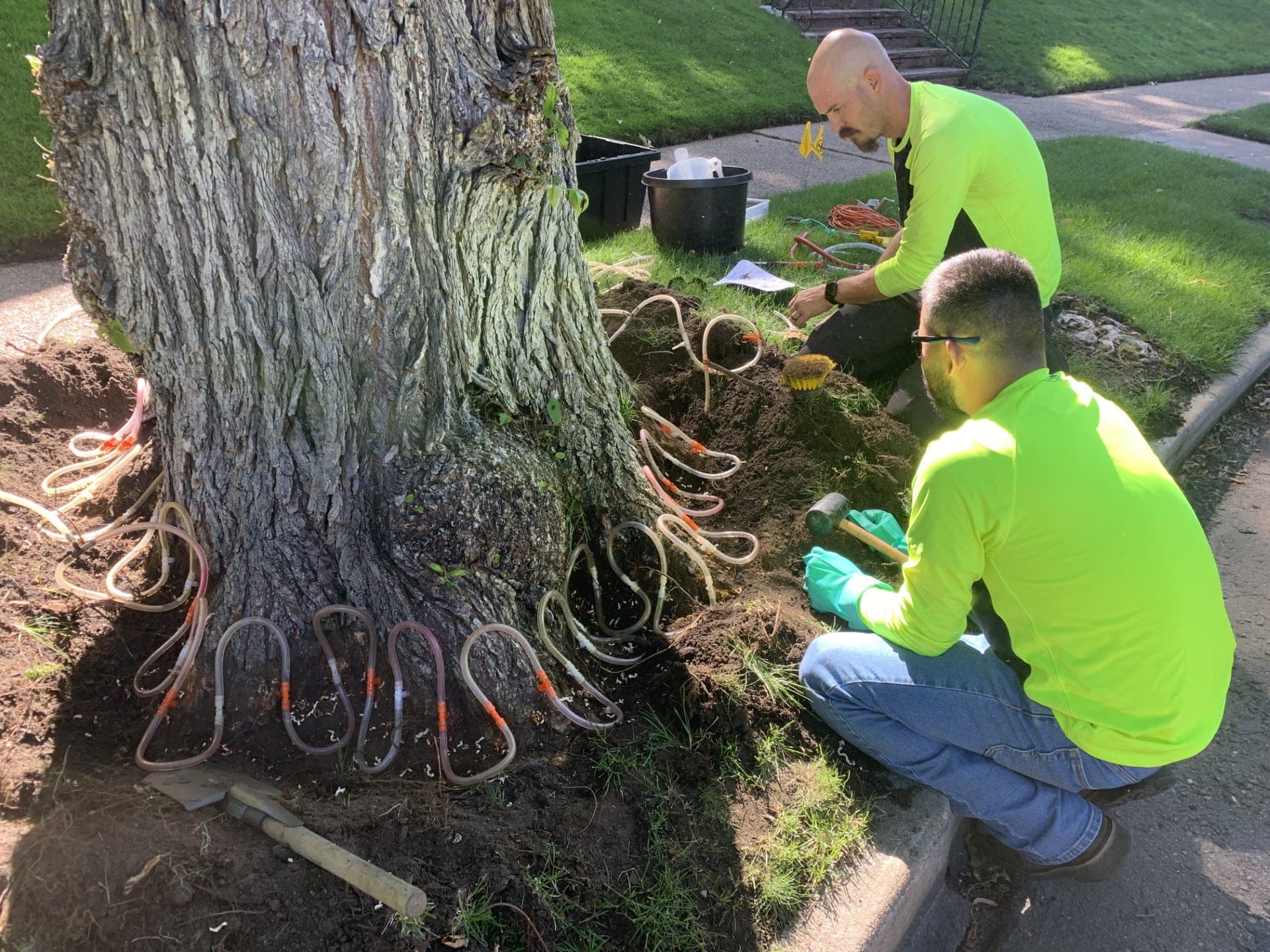
Trunk injection places the insecticide directly into the tree's conductive tissue through small ports at the base of the trunk, so the product moves into the canopy without being spread on the ground or sprayed into the air. We use it for ash trees over 8 inches in diameter at breast height, and it is most effective in May and June, when the tree is actively moving water. Trunk injection has shown better control than soil-applied products.
Soil injection places the product in the soil at the base of the tree, where the roots take it up. We use it for ash under 8 inches in diameter, and it is most effective in March and April so the product is in the tree before beetles are active.
Either way, the tree needs enough healthy canopy and roots to move the product, which is why we assess every tree before recommending treatment.
How often treatment is repeated
EAB treatment is a long-term commitment: protection lasts only as long as treatments continue, and they may be needed for the rest of the tree's life. How often depends on the product and method. Soil-applied treatments are generally repeated every year, while some trunk-injected products protect for more than one season. Your arborist will explain the schedule for the method recommended for your tree.
No treatment carries a 100% guarantee, but healthy, well-watered trees that are treated on schedule have the best outlook.
What drives the cost
We don't publish a price list, because the main factor is the size of each tree. Larger trees need more product and more time to inject. The number of trees on the property and whether they're treated in the same visit also affect the price.
A certified arborist measures each ash, rates its health and gives you a free estimate. For a small or struggling ash, it is often more cost-effective to remove and replace it than to pay for treatment over many years, and we'll tell you if that's the case.
Treat, monitor or remove
- Treat healthy, vigorous ash trees that are important to your landscape.
- Monitor ash trees you are still deciding about, and check them each season for canopy thinning, bark splits and woodpecker damage.
- Remove and replace ash trees that are already in decline, poorly placed or not worth a long-term treatment plan. See our tree removal service.
EAB treatment is part of our plant health care service. American Arbor Care holds the licenses required by the Colorado Department of Agriculture to apply pesticides. Request a free estimate or call 303.639.8584.