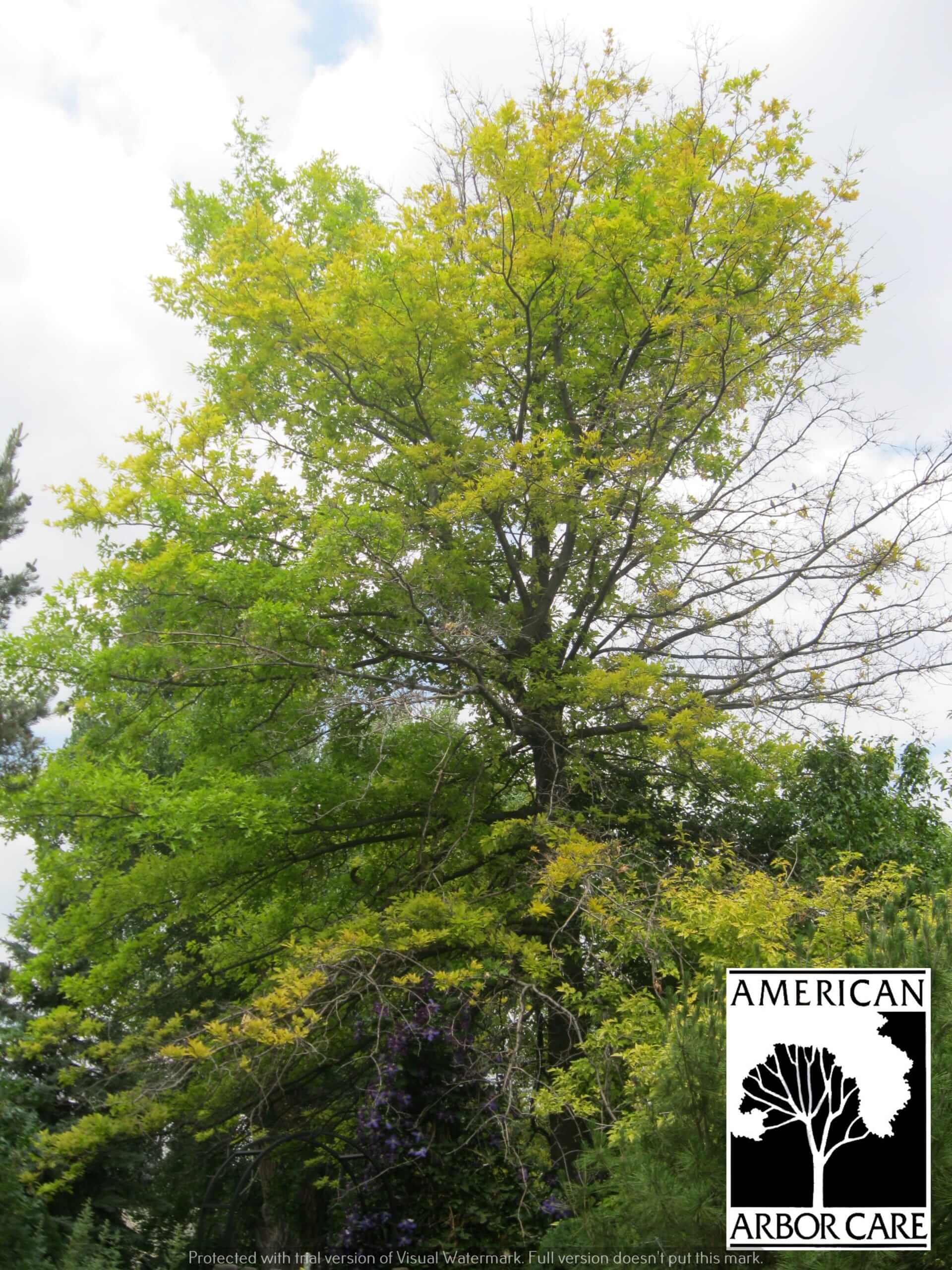
What iron chlorosis looks like
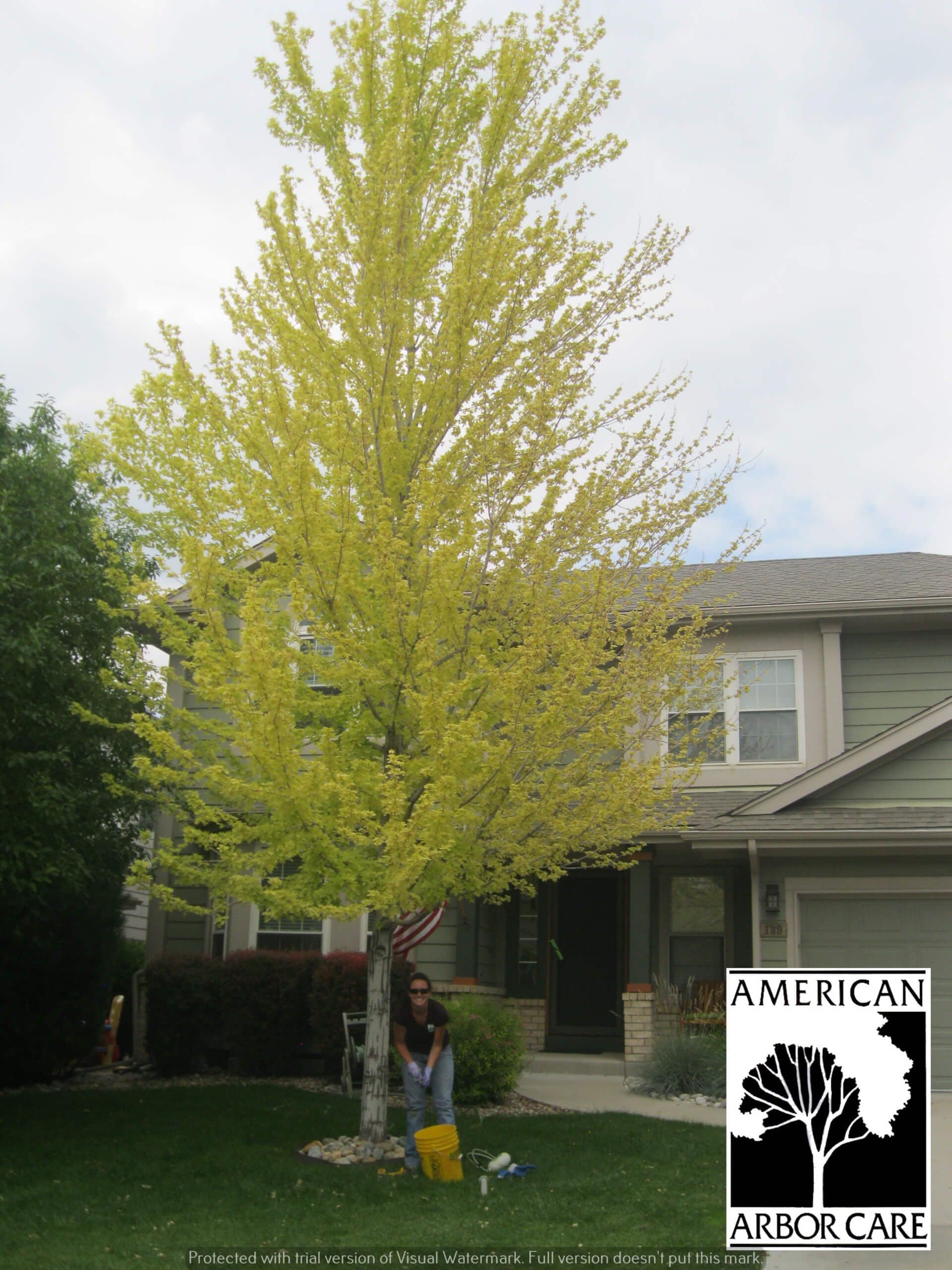
- Leaves turn pale green to yellow while the veins stay green
- Symptoms start on the newest leaves and at the ends of branches
- In severe cases leaves turn almost white, brown at the edges and drop early
- Over several years, branches die back and the tree loses vigor
Other problems can yellow leaves too, including overwatering, compacted soil, root damage and some pests. An arborist checks for those before recommending iron treatment.
Why it is so common along the Front Range
Most Denver-area soils are alkaline and high in lime. At a high soil pH, iron changes into forms that roots can't absorb, even though there is plenty of it in the ground. Heavy clay, compaction and too much water make the problem worse because they reduce the oxygen roots need to take up nutrients.
Some trees are much more sensitive than others. Silver maple, red maple and Freeman maples such as Autumn Blaze, and pin oak, are among the trees most often affected in Denver yards.
How iron chlorosis is treated
Trunk injection places iron directly into the tree, where it can green up the canopy without depending on the soil. It is often the most reliable option for large trees with moderate to severe symptoms, and results can last more than one season.
Soil-applied chelated iron uses a form of iron that stays available in alkaline soil. It is applied in spring to the root zone and is a good option for smaller trees and shrubs.
Soil and water care supports either treatment: avoid overwatering, relieve compaction where possible, and mulch the root zone. Iron treatment manages the symptoms; it does not change the underlying soil, so many trees need ongoing care.
When to call an arborist
Call if yellowing comes back every year, if leaves are browning at the edges, or if branches are dying back. Early treatment is easier on the tree than waiting until the canopy has thinned.
Iron chlorosis treatment is part of our plant health care service, and our iron chlorosis article has more background. Request a free estimate or call 303.639.8584.